A neighborhood developer remembers the origins of the Brookland Baptist Church in 1880.
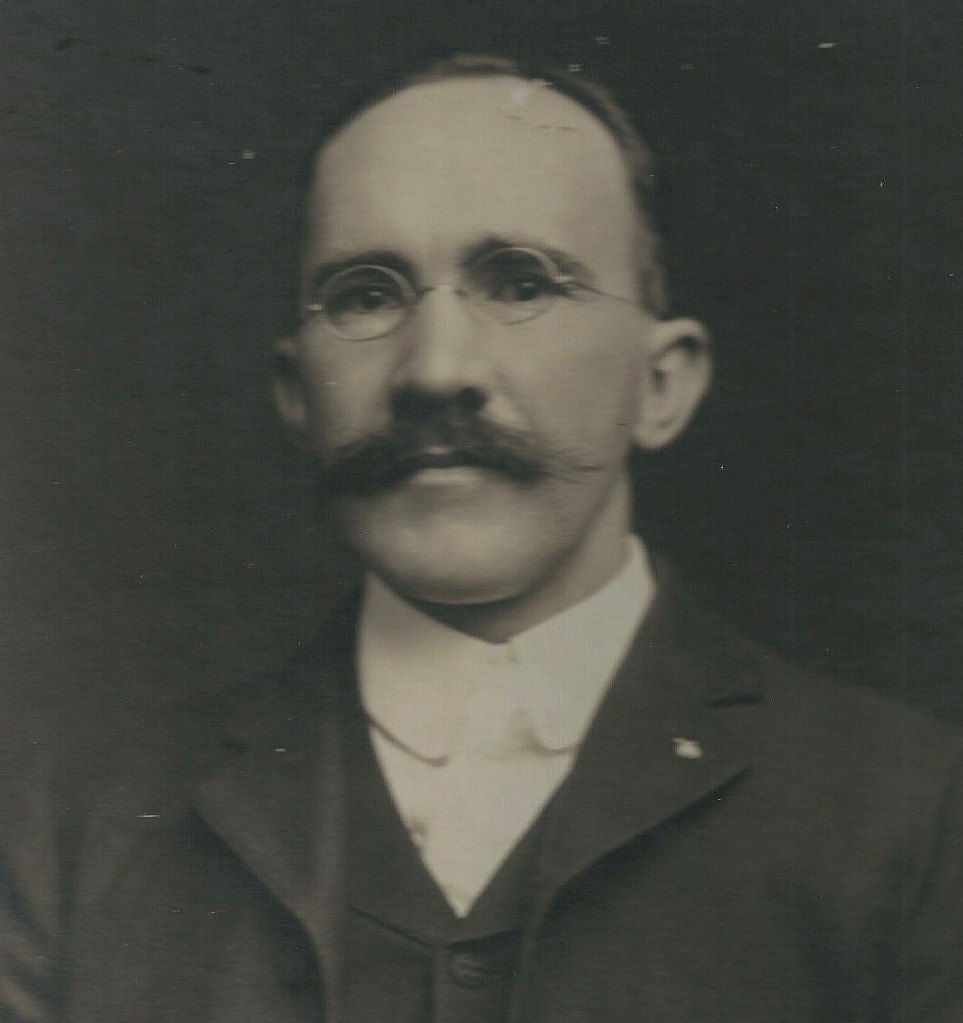
James Lewis Sherwood (above), along with his younger brother Jesse, were two of Brookland’s early property developers. I’ve written about them before, and live in one of the homes James occupied in the 1920s. https://bygonebrookland.com/2015/12/08/brooklands-property-brothers/
Born in Alexandria, Virginia, James and Jesse moved to the District in 1880 when their father, Jesse Sr., bought 25 acres of property to pursue market gardening in what would become the future Brookland. Through my research, I met Emily Morrison, the great-granddaughter of James, and some of his other descendants. Emily provided me with lots of historic material about the Sherwoods, including a short history of the Brookland Baptist Church. James wrote it in 1941, and read it to the congregation on the 60th anniversary of the church. It contains many fascinating details about the early neighborhood that are worth sharing.
“To recall events that occurred sixty years ago is quite an undertaking, especially when one has very few records to consult. However, I shall try to recall as many items of interest as possible in connection with the early days of this church.
During the spring and summer of 1880, several families living in this section met at the home of Mr. John B. Lord and agreed to begin the erection of a church building. This group consisted of Mr. John B. Lord, Mr. Isaac Quackenbush, and Mr. Sidney F. Teasdale, with their families.
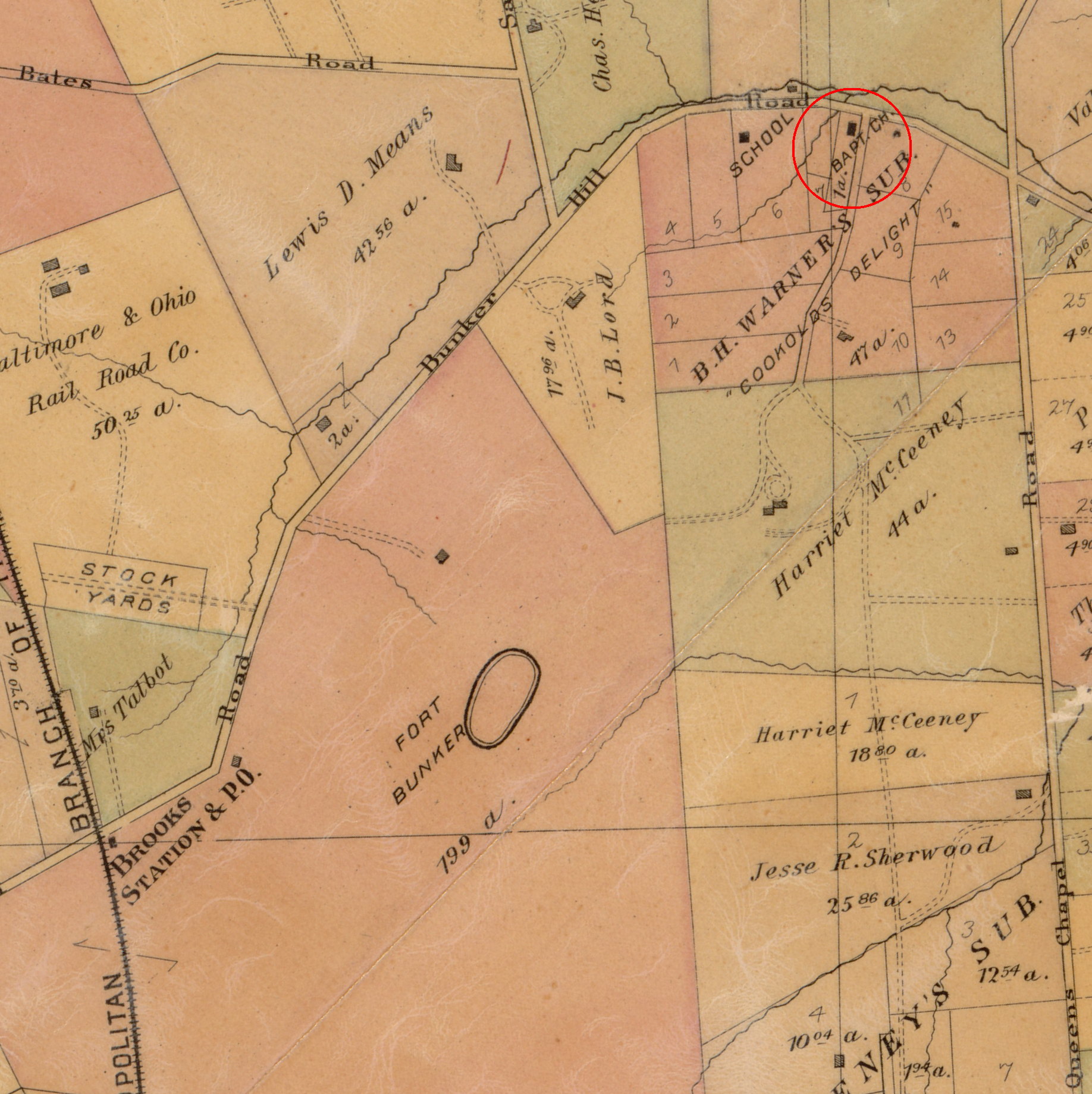
One acre of land was secured at a price of one hundred dollars, to be paid when they were able after the building was erected. This land was part of Warner and Wilson’s subdivision of Cuckold’s Delight, located where South Dakota Avenue and Michigan Avenue now intersect – then known as Bunker Hill Road.“
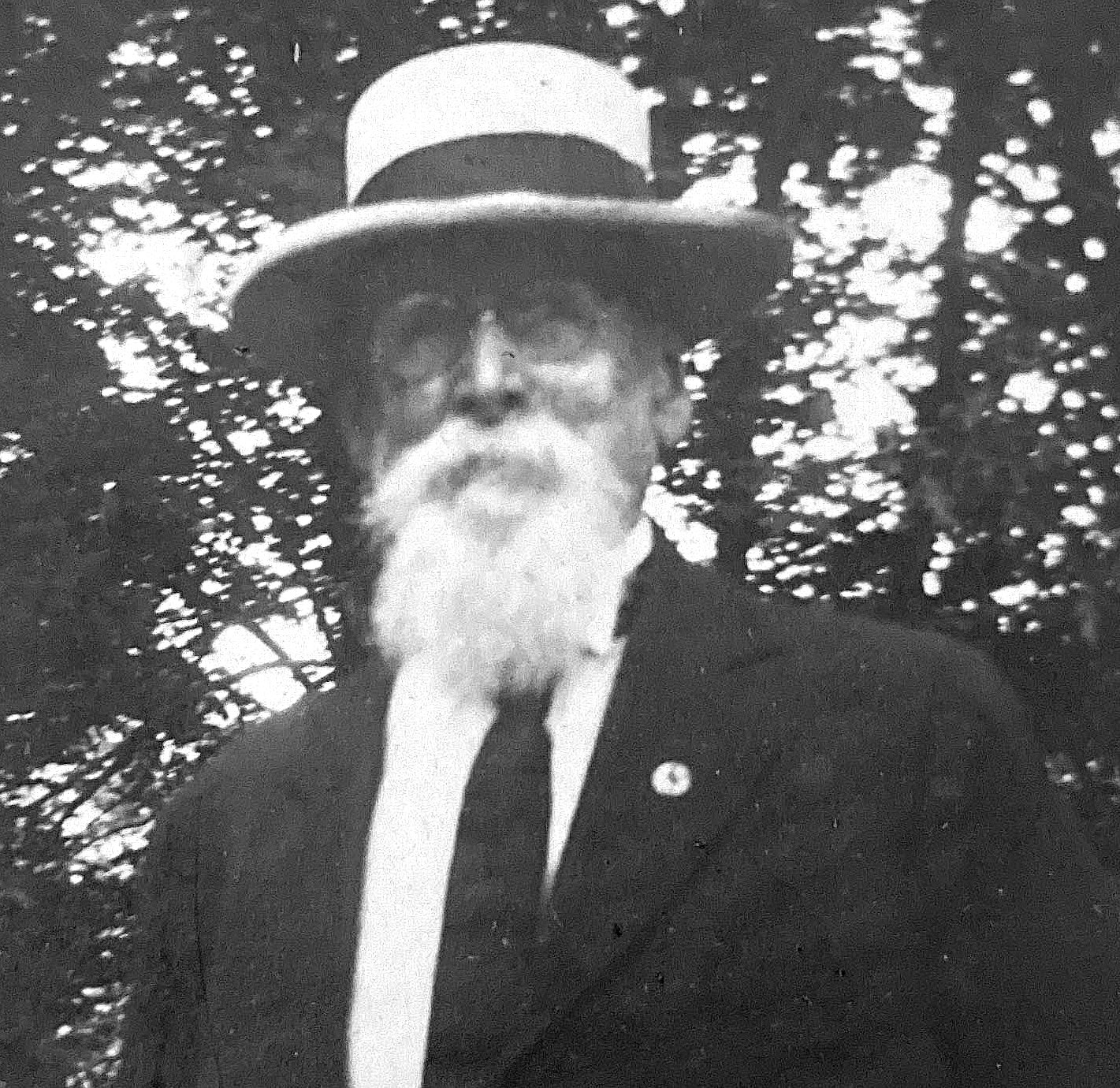
John B. Lord (left) was one of the wealthier residents in the area. He was a carpenter who soon became a wood, coal and sand merchant. His daughter Rose would eventually marry James L. Sherwood. The acre of land that was purchased for the church was in an area referred to as Queenstown, having originally been part of the farm of Nicholas Queen. In the Hopkins map below from 1887 you can see the one acre plot for the Baptist Church (circled in red), John B. Lord’s 18-acre estate just to the west, and a little south the 25-acre plot Jesse R. Sherwood bought for gardening in 1880. Unfortunately I’ve been unable to locate any pictures of the original church.
“These earnest, ambitious men determined to do the work of constructing the building. The brick laying was done mostly by Mr. Quackenbush, although all three of the men did some. Mr. Lord was a carpenter by trade and Mr. Teasdale helped in every way he could. Even the ladies assisted by handing up brick to the workmen. This work was slow and it took all summer to get the building into shape to occupy. Finally the building was nearly completed and, to give the country people living in the radius of several miles a chance to help financially, a turkey dinner was planned in November by the ladies.
In this connection, I might mention that my Father moved here in October, 1880 and my first introduction to the group who were struggling to complete the Church, was when I carried a roasted turkey for the dinner, as a donation from my Mother. This event went a long way towards shaping many years of my life. The dinner was a success and many lovely friendships were made.
On February 11, 1881, the actual organization of the Church was completed. At the organization meeting, letters were presented by Sidney F. Teasdale, Mrs. Susan Frances Teasdale, and their son Colley A. and daughter Lola M. Teasdale. Also by Mr. John B. Lord and Miss Rose E. Lord; also Mr. Isaac Quackenbush and Mrs. Elsie Jane Quackenbush. They met in the new building and Mr. John B. Lord was elected moderator. They resolved to organize into a regular Baptist Church, to be named “The Queenstown Baptist Church”; adopted articles of Faith and Church Covenant; and at a meeting held February 13, a request to invite all the Baptist Churches of the District to send delegates to recognize this Church as a regular Baptist Church was adopted. This formal action was taken on Sunday, February 27, 1881.
On March 30, 1881, the first new member was admitted – Mr. Charles E. McClelland. Mr. McClelland was baptized by the Rev. C. C. Meador, Pastor of the First Baptist Church.
As the church was not equipped with a baptistry, several places were used for that purpose. Once the Eastern Branch at Bladensburg was used; another time Northwest Branch, where it crosses the Queens Chapel Road, and several times the stream that ran along the Bunker Hill Road opposite the Church was used. Eight were baptized in that stream Sunday, November 18, 1883. This number included Mrs. John B. Lord, who had until this time retained her membership in the Methodist Church, two children of Mr. Quackenbush, one later became Mrs. John B. Lord, Jr. and after his death, Mrs. John Wignall, and myself. It was a cold, dreary November day and that morning about one inch of ice was skimmed off the pool.“
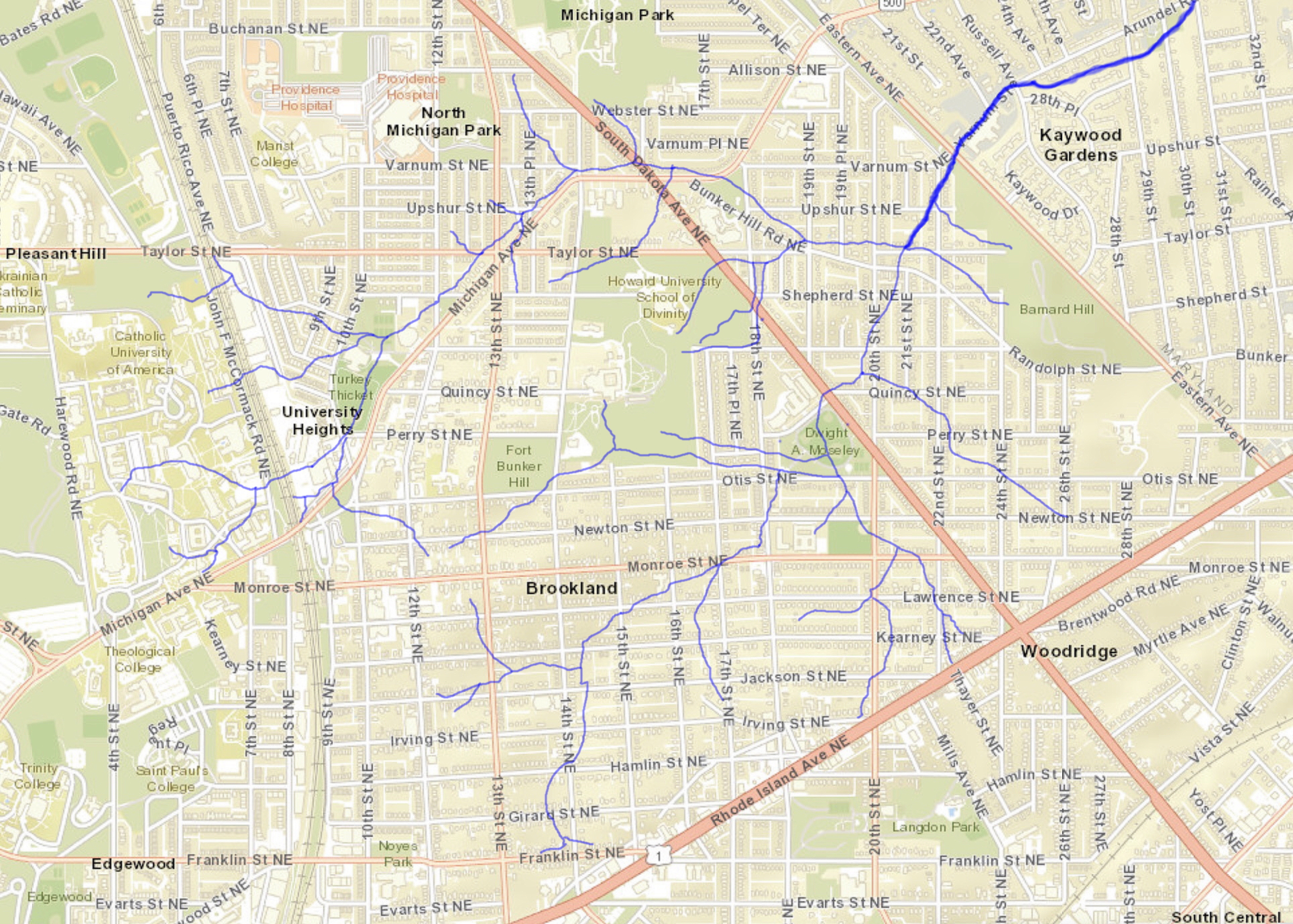
The stream where James was baptized was one of many that were sprinkled throughout the area, and would soon be piped underground as the neighborhood developed. I’ve written about that as well: https://bygonebrookland.com/2018/10/08/a-river-used-to-run-through-it/
“The Church continued to grow – the spiritual condition was excellent and the social life produced by the coming of the Church into the community was delightful. The people met at various homes to hold what were called “Mite Meetings.” Recitation, reading, and talks, with refreshments served, made delightful evenings and everybody enjoyed themselves.
No one here can begin to realize what the road conditions were in those days. This was long before Brookland was developed. There were only two roads from the city, which begin at what was then Boundary Street (now Florida Avenue) – Glenwood Road [Lincoln Road], into Bunker Hill Road, Brentwood Road, and Queens Chapel Road intersecting. The Queens Chapel Road, now 18th Street, was so bad in the early Spring that horses could hardly pull their feet out of the clay. During bad weather we often walked along the banks or in the fields adjoining the road rather than to try to walk over the road. Those were days of the simple life, but they were worth it. It took rugged, hardy men to get up at two or three o’clock in the morning to drive to town, as Mr. Quackenbush did to deliver milk, and as others did to get to market. But such were the men who organized this Church – their faith and courage – as determined to build this Church in the then country as they were to make a living under conditions so different from today. The knowledge of the hardships experienced by those early pioneers act as an inspiration to those of today.
While this was quite a long way from the city, events happened from time to time to give the people additional subject for conversation. One member, who because of his appetite for strong drink, decided to avenge the shooting of President Garfield; rode into town on horseback, followed the van from the Court House towards jail, and shot at Guiteau, the assassin. This brought a number of mounted officers into the community looking for Bill Jones, “the avenger.”
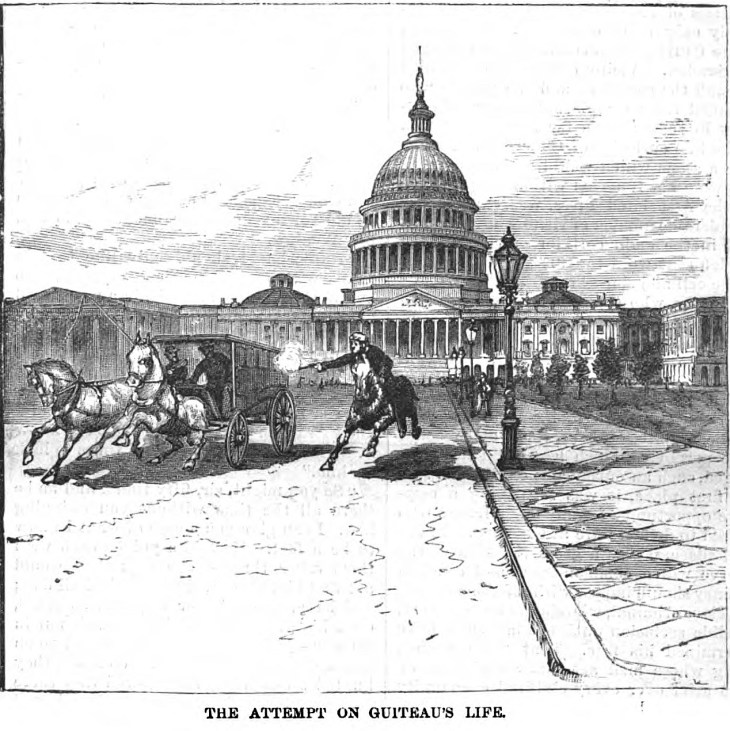
The story of Bill Jones is fascinating history and adds to the distinctive lore of the neighborhood. I wrote about his exploits a few years ago: https://bygonebrookland.com/2017/06/09/bill-jones-the-avenger/
“Another time a poor colored woman killed two children who had been left in her care. This happened just opposite where the Church was located and where the Carmelite College now stands. These were tragic events, but life was not all tragedy. Fourth of July celebrations and excursion down the Potomac brought neighbors and friends together, some of who were not connected with the Church.“
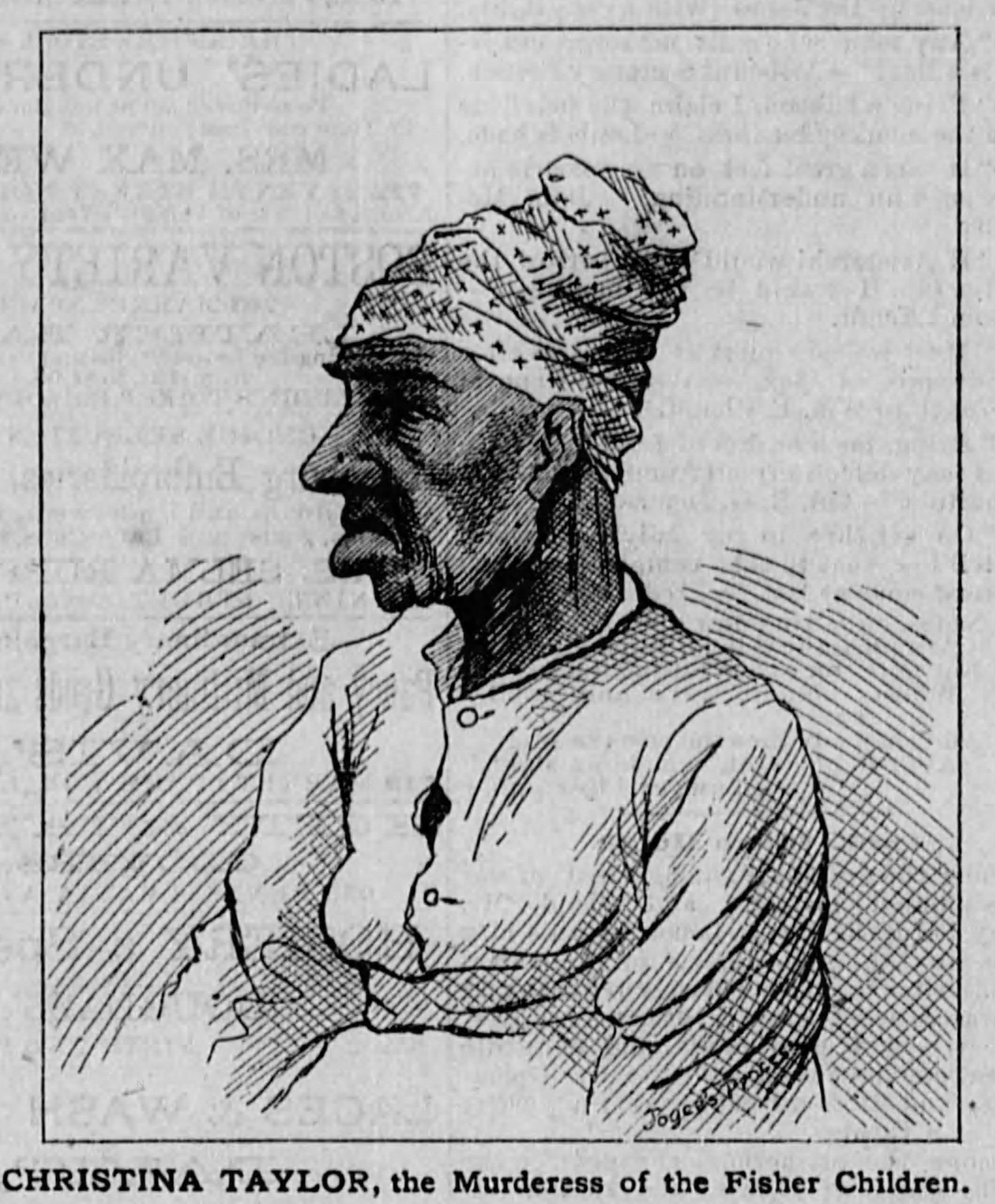
The tragic story of Christina Taylor and the two Fisher children horrified the area, and was gossiped about for decades afterward. The newspaper coverage of the event was not journalism’s finest hour. The descriptions of the dead children were graphic, the writing was speculative, and the Taylor woman was essentially declared guilty even before the trial. And as is evident by the drawing that the Evening Critic commissioned (right), racism was abundantly apparent. I wrote about her story last year. https://bygonebrookland.com/2024/02/26/horrific-murder-on-a-bunker-hill-road-farm/
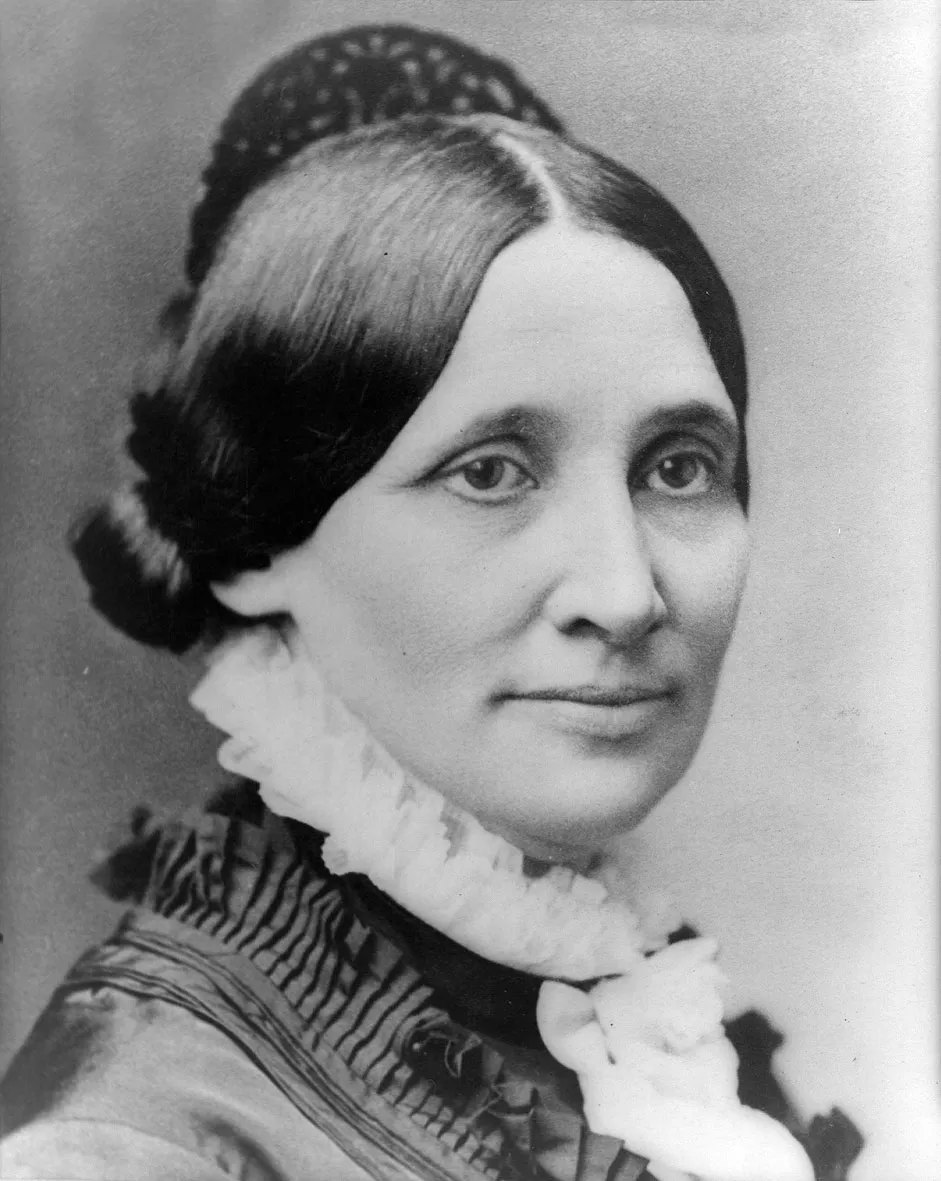
“I might mention that while the Church was being built, one afternoon while the ladies were helping to carry brick and give encouragement to the men at work, a carriage drove up and stopped. The occupant of the carriage inquired what was being built and after talking with her for a while the ladies were surprised to learn that it was Mrs. R. B. Hayes, the wife of the President of the United States [left]. Before leaving, Mrs. Hayes handed one of the ladies a five dollar gold piece with words of praise for their efforts and every good wish for its success. This event enthused and encouraged all hands.
Shortly after the Church building was completed, a family from Terra Cotta began to attend services here. In the family was a dear old saint known as Brother George, probably 85 years of age. He was always on hand at prayer meetings around at the homes and at Church. His exclamations of “Praise God,” and “Bless my Soul, Oh God,” and “Blessed be the name of God,” were frequent and when the time of his death came he was greatly missed.
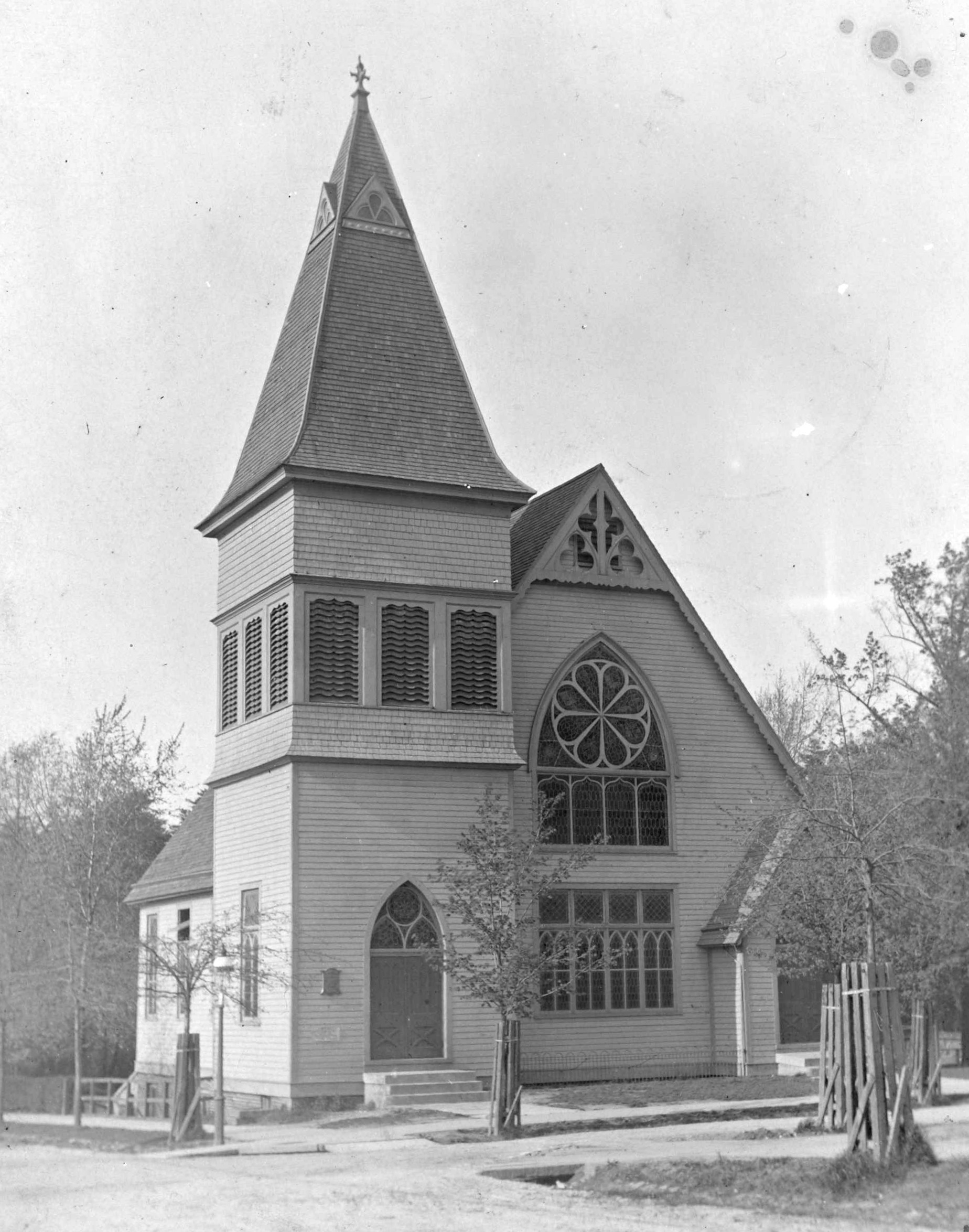
In April, 1891, a movement was started to change the location of the Church from Queenstown to Brookland. This suggestion was offered by the Reverend Mr. West and found favor at once. The plans were prepared for a new Church at the corner of 12th and Newton Streets, where the Newton Theater now stands. This proved to be a wise move. The Church grew rapidly and many delightful gatherings were enjoyed there. Unfortunately, fire destroyed that building, Now we enjoy the most modern equipped Sunday School building in the district. This is something to be very proud of, but the outstanding need today is for a new Church building that will fulfill the promise that “The Glory of the Latter House will be greater than that of the former – Saith the Lord.”
The Sunday school building Sherwood refers to was built in 1927 at the corner of 16th and Monroe Streets, a year after the old church burned down. The “outstanding need” for a new church building wasn’t fulfilled until 1953. James Sherwood turned over the first spade at the groundbreaking. He was 91 years old at the time. Both buildings still stand, though they have been vacant for many years.
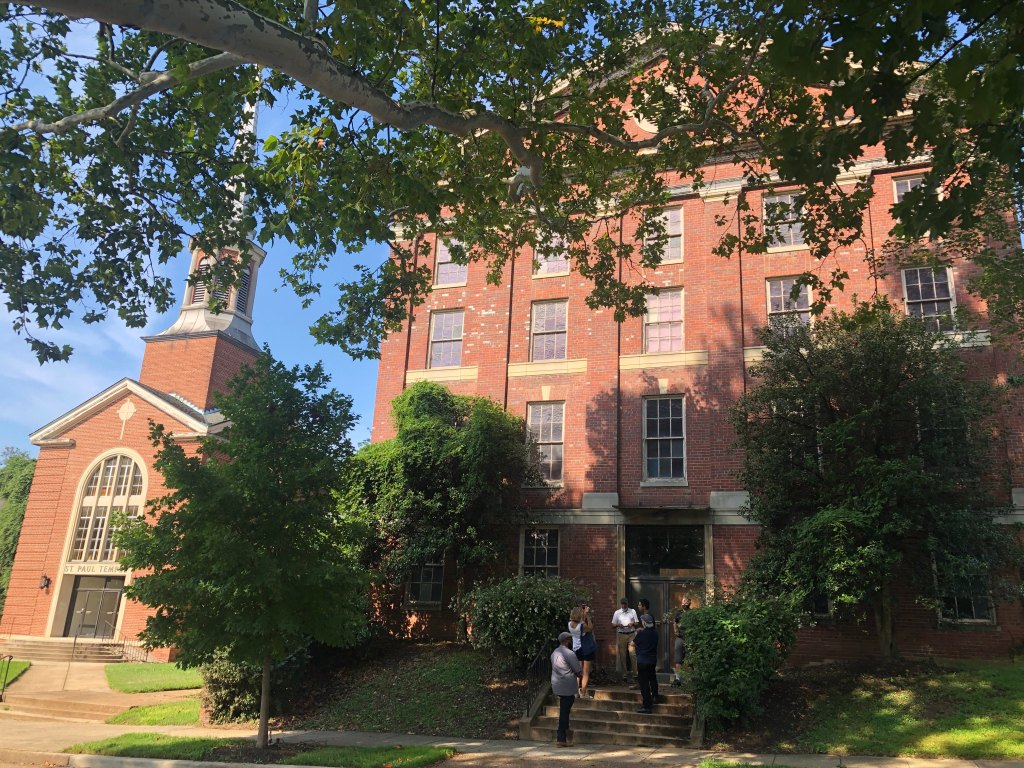
Though Brookland is known as a Catholic neighborhood due to Catholic University and its satellite institutions, the Brookland Baptist Church was the first to be built, and held an important and influential position in the community from its beginning in 1881 until 1972. Brookland had become a predominantly African American community by then and the all-white Brookland Baptist Church congregation decided to leave the city and merge with the Hillandale Baptist Church in Prince George’s County. The Sojourner Truth Montessori School now owns the Sunday school building and are working to renovate it.
My thanks to Emily Morrison for letting me publish her great-grandfather’s memories. The pictures of James Sherwood and John B. Lord are from her family album.
 Bygone Brookland